
Stop Heat at the Source
Radiant Barrier Installation
Most heat entering your home doesn’t come through the air — it radiates from the roof into your attic. Radiant barrier systems are designed to block that heat before it has a chance to build, helping stabilize temperatures and reduce the load on your home.
Where Heat Builds Up
Your Attic Absorbs More Heat Than You Think
As the sun hits your roof, heat transfers directly into the attic space, raising temperatures well beyond what most people expect.
In many homes, this heat isn’t stopped — it builds throughout the day, radiates downward, and forces your HVAC system to work harder just to keep up.
Traditional insulation slows heat movement, but it doesn’t stop radiant heat at its source.
What Most PEOPLE Miss
Insulation Alone Doesn’t Block Radiant Heat
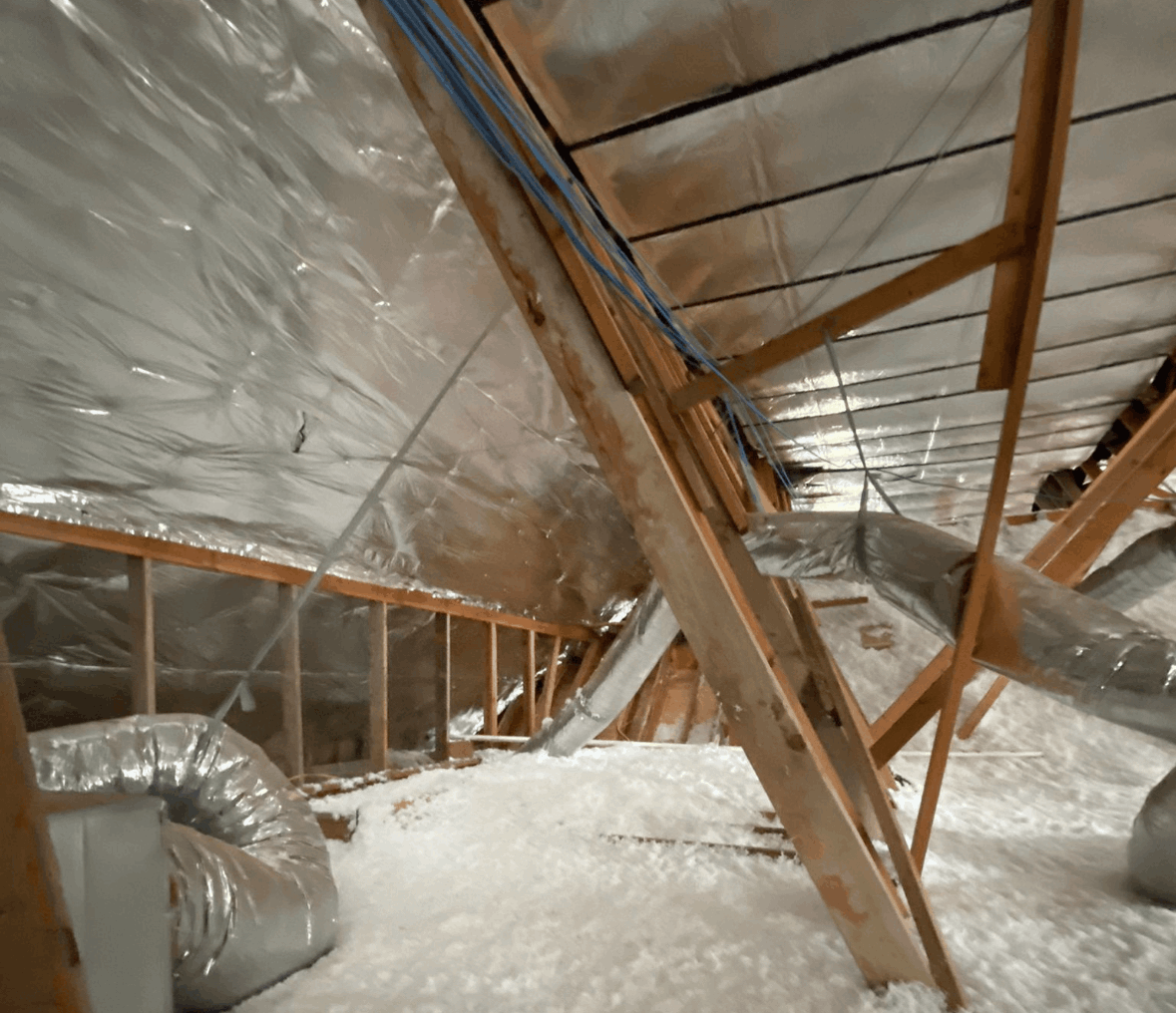
Even well-installed insulation allows radiant heat to pass through over time.
Without a reflective barrier in place, attic temperatures continue to climb — especially during peak daylight hours — creating uneven indoor temperatures and unnecessary strain on cooling systems.
Radiant heat is a different problem, and it requires a different solution.
A Barrier That Works Differently
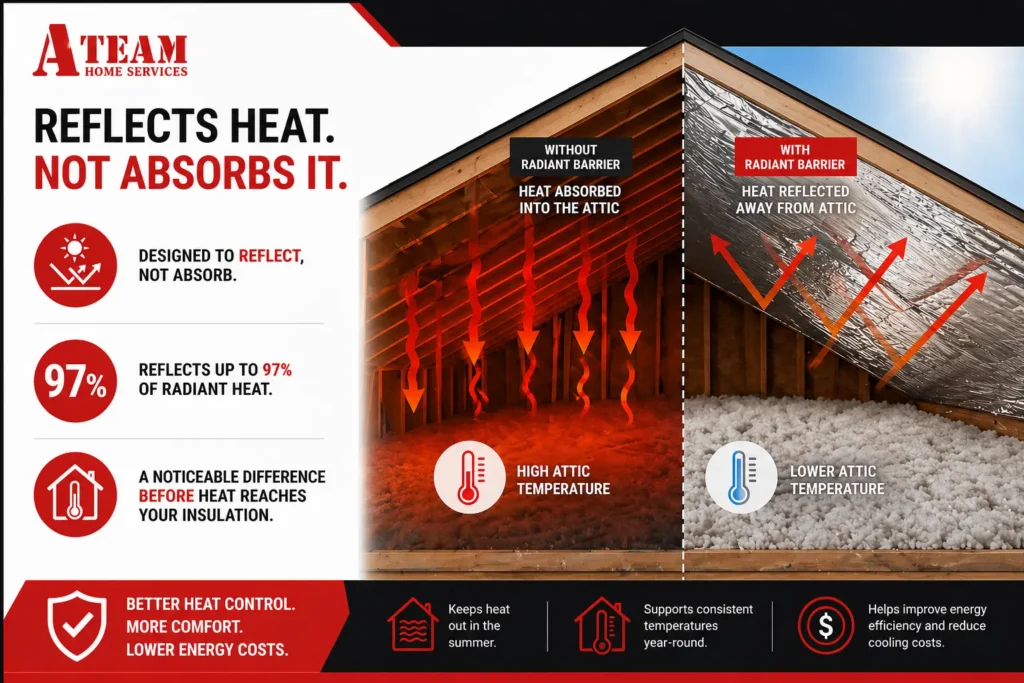
Radiant barrier systems are designed to reflect heat away from your attic rather than absorb it.
By reflecting up to 97% of radiant heat, these systems significantly reduce the amount of heat that enters the attic space — helping maintain more stable conditions throughout the home.
When installed correctly, it creates a noticeable difference in how heat behaves before it ever reaches your insulation.
Less Heat. More Control.
Lower attic temperatures during peak heat hours
Installed With Purpose
Precision Matters With Radiant Barriers
Step 1
Step 2
Step 3
Step 4
Material Matters
Not All Radiant Barriers Are the Same
We use high-performance radiant barrier materials designed for durability, safety, and long-term performance.
The difference isn’t just in the concept — it’s in the material itself.
Part of the System
Works Best When Everything Works Together
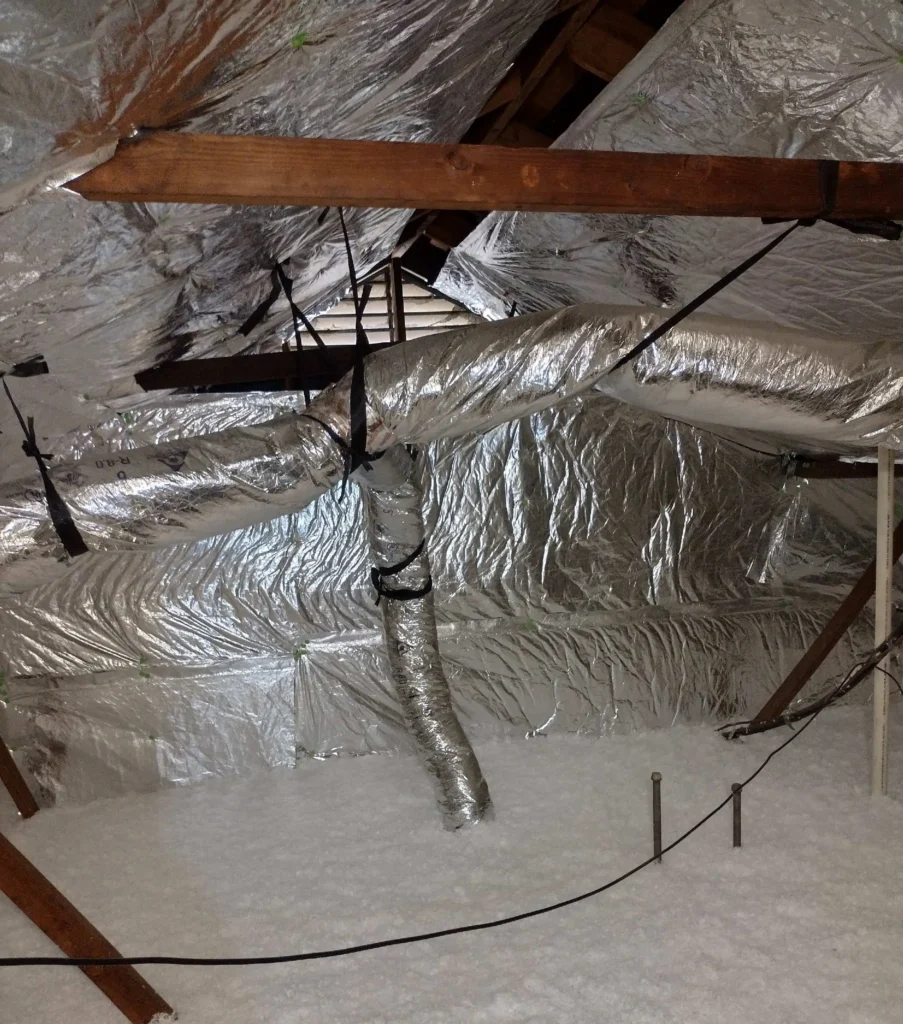
Radiant barriers are most effective when combined with proper insulation and ventilation.
By addressing how heat enters, moves, and exits the attic, we create a more balanced system that performs consistently — not just temporarily.
If your attic is holding heat, we’ll show you how to stop it before it becomes a problem inside your home.